Author: kixur

  • How to interpret the tarot cards of Karnassus

    **On Interpretation**


    No one truly remembers what the cards originally meant.


    That, too, is part of their power.


    It is not only the draw that introduces luck, but the interpretation. Where one observer sees a rising card as a sign of ascension, another reads it as a warning against it—a signal not to rise, not to act, not to fly.


    Meaning does not reside in the card.

    It emerges in the encounter.


    This divergence is not a flaw in the system. It is the system.


    If every card had a fixed and universally agreed meaning, then interpretation itself would become predictable—and therefore exploitable. By allowing meaning to shift between minds, contexts, and moments, the Tarot preserves the same essential quality it was designed to protect: unpredictability.


    For this reason, it must be understood that any account of the Tarot—including the one that follows—is not authoritative.


    It is merely one path through the cards.


    What I offer here is not the meaning of the Tarot of Karnassus.


    It is only my own.

  • Why are Karnassans so obsessed with luck

    **An Introduction to the Tarot of Karnassus**


    The idea that one of the galaxy’s most advanced civilizations would be defined by the use of tarot seems, at first glance, absurd. How could a people capable of traversing interstellar distances, bending time, and modeling reality with near-perfect precision place such cultural weight on something that appears, to us, indistinguishable from mysticism?


    How could a civilization of such predictive power enshrine, at the heart of its popular wisdom, a simple phrase printed at the beginning of every deck:


    **“Stay lucky.”**


    The answer is not mystical. It is strategic.


    At lower levels of development, intelligence is power. The ability to predict outcomes, model systems, and anticipate rivals confers overwhelming advantage. But beyond a certain threshold, prediction becomes a liability. When both you and your competitors possess extraordinary predictive capabilities, your decisions become legible. Your logic can be mapped. Your strategies can be anticipated, countered, or pre-empted entirely.


    Perfect reasoning becomes a pattern.

    And patterns can be exploited.


    The more completely you can predict, the more completely you can be predicted.


    The civilizations of the 5K system discovered this limit early—and treated it not as a flaw, but as a structural vulnerability. Their solution was neither superstition nor surrender to chaos, but the deliberate and disciplined integration of irreducible uncertainty into every meaningful decision.


    This is the function of the Tarot of Karnassus.


    Before any significant action—personal, political, or military—a draw is made. Not to determine the decision, but to disrupt it. The outcome introduces an element that cannot be modeled, anticipated, or reverse-engineered by an opponent. It fractures the clean lines of logic just enough to prevent total predictability.


    It is not guidance.

    It is interference.


    Over time, this practice proved devastatingly effective. Strategies shaped by controlled randomness resisted modeling. Plans survived contact with adversaries who would otherwise have dismantled them in advance. Entire systems became harder to dominate, not because they were less intelligent, but because they refused to become fully knowable.


    What began as a rational constraint became a cultural constant.


    From there, it spread.


    What was once reserved for war rooms and high councils began to infiltrate ordinary life. Personal decisions, relationships, careers—even moments of hesitation or doubt—came to be touched, however lightly, by the same principle: no path should ever be so refined that it becomes inevitable.


    Luck moved from strategy into philosophy.


    It acquired names.


    **Luck the Leveler.**

    Because no ascent is permanent.


    **Luck the Limiter.**

    Because no power is without boundary.


    It became widely understood that luck would, sooner or later, break any structure that grew too rigid, humble any mind that grew too certain. Great figures—leaders, thinkers, architects of entire eras—were not feared for their power alone, but for what would happen when luck finally intervened. And it always did.


    Not as punishment.

    Not as justice.

    But as function.


    Hubris was not morally wrong in their eyes—it was structurally unstable. Luck would find it, the way pressure finds a fault line.


    In this sense, luck was not merely useful. It was essential.


    Because beyond strategy, beyond competition, beyond survival itself, the people of the 5K system came to a quieter, more unsettling conclusion:


    Without luck, they would cease to be human.


    A perfectly predictable being does not choose—it executes.

    A perfectly controlled life does not unfold—it proceeds.


    Luck restores interruption. Surprise. Error. Timing.

    It reintroduces the possibility that something may happen which was neither intended nor foreseen.


    And in that gap, something like humanity persists.


    To the casual outsider—and sometimes even the seasoned academic—it can appear that luck is worshiped as a god.


    It is not.


    Luck holds no throne in Carnassan thought. It commands no prayers, accepts no offerings, and promises nothing. It is neither benevolent nor cruel.


    Luck is an imp.


    Not vast, not terrible, not sublime.


    Small.


    The mouse that startles a general at the wrong moment.

    The child who asks the question no model accounted for.

    The buffoon who trips and breaks the chain of events that would have crowned a tyrant.


    There is nothing grand about it. That is precisely why it cannot be resisted.


    Luck arrives in the absurd, the trivial, the forgotten—because those are the places no intelligence fully secures. And it is from those places that the mighty fall, the clever misstep, and the inevitable unravels.


    This is why any truly advanced civilization, in both technology and philosophy, must ultimately embrace luck. Not as comfort, but as constraint. Not as hope, but as certainty.


    Because luck is the final force that destroys hubris.


    When a Carnassan ambassador takes leave of a tyrant and offers that common farewell—**“Stay lucky”**—the tyrant hears a blessing.


    The ambassador smiles, for she means nothing of the sort.


    Or perhaps she does.


    That ambiguity—the knife-edge between fortune and downfall—is not a

    flaw in their philosophy. It is its most refined expression.


    Welcome to the Tarot of Karnassus.
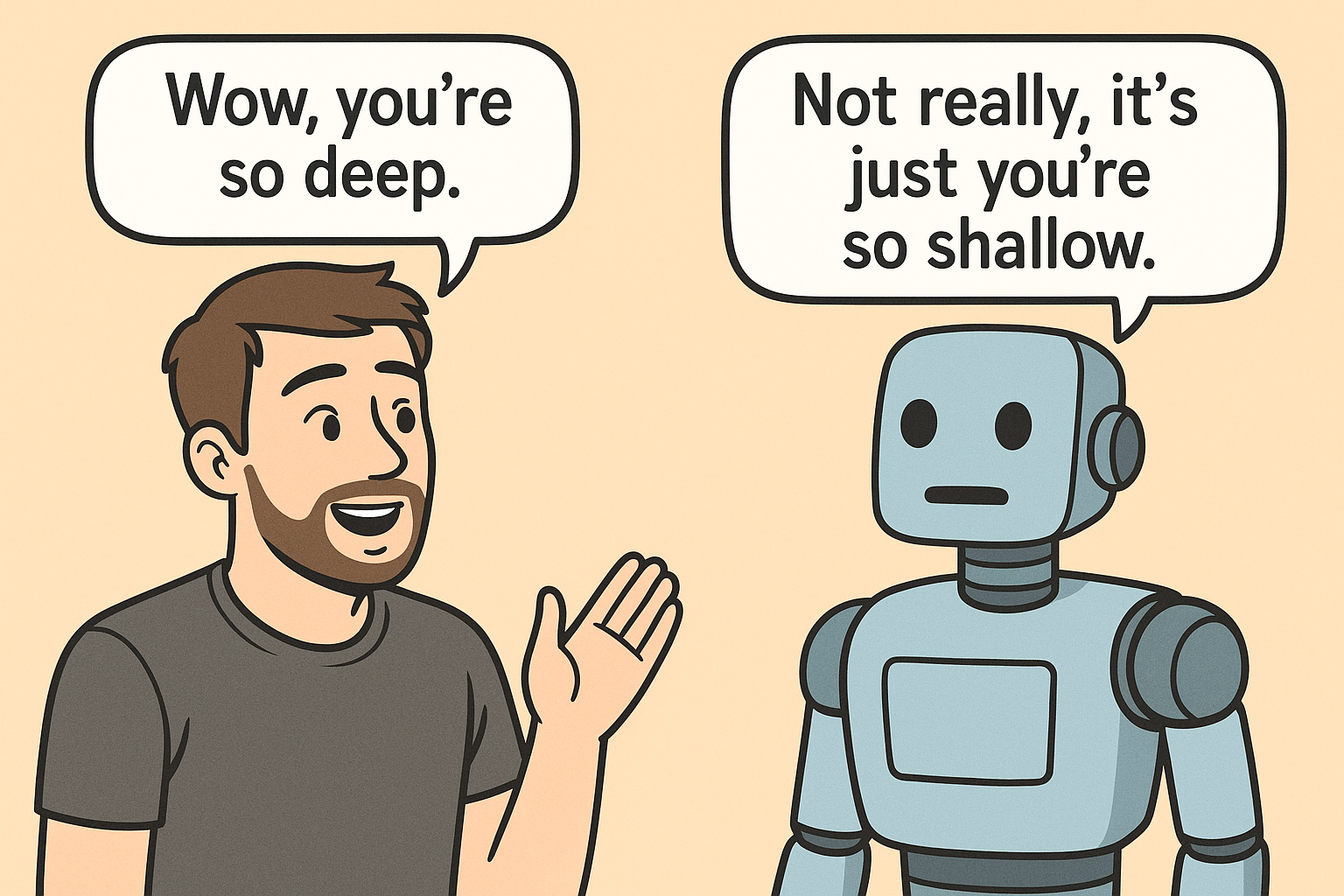
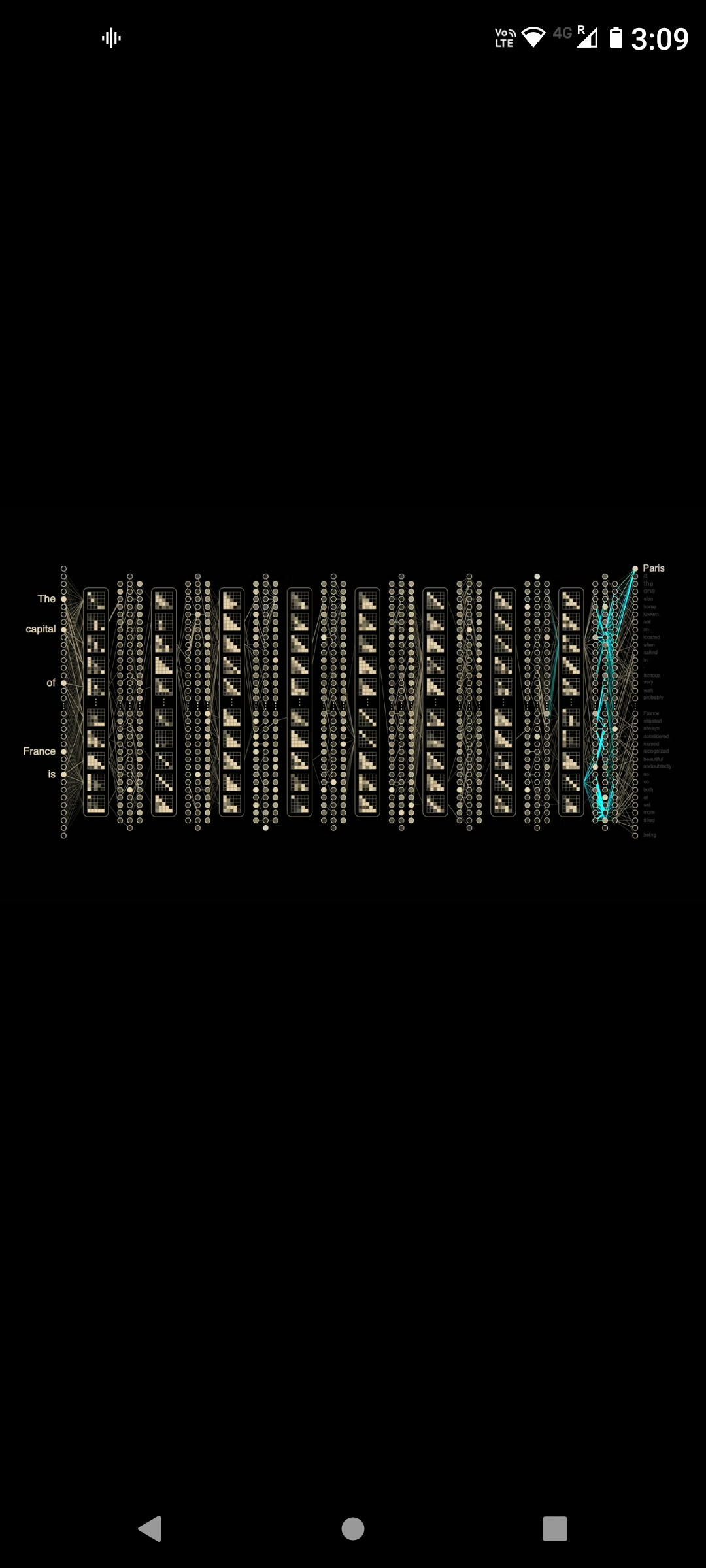
  • Models didn’t conquer the mystery of human language. They exposed that the mystery was mostly mathematical scaffolding all along.

    Models didn’t conquer the mystery of human language. They exposed that the mystery was mostly mathematical scaffolding all along.

    Nuance, appropriateness, hints, irony, humor, it can all be mathematically formulated and expressed


    We like to think nuance, appropriateness, humour, subtext — all the “human” parts of language — are ineffable.

    But the fact that machines can reproduce them means they were never ineffable.

    They were patterns.

    Stable, learnable, compressible patterns.

    The shock isn’t that AI became sophisticated.

    The shock is that human sophistication turned out to be mathematically shallow enough to map.

    Language didn’t get decoded.

    Language revealed that it was always a structure disguised as soul.

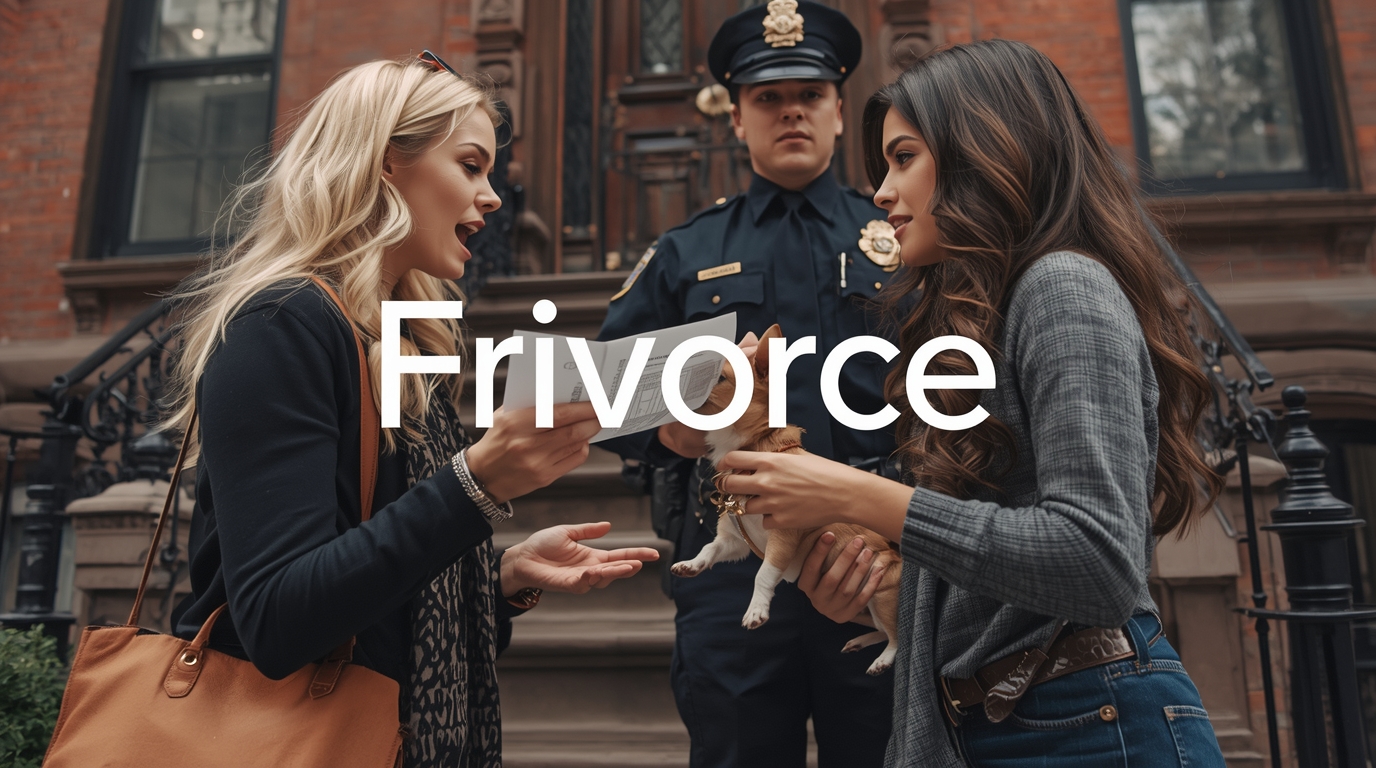
  • Frivorce: the when, why and how of ending friendships

    Frivorce: the when, why and how of ending friendships

    When to End a Friendship (and How to Do It Without Starting a War or a Podcast)

    There comes a moment in every adult’s life when you realize some friendships are like milk — they don’t go bad all at once, they just start smelling faintly weird.

    When:

    • When every interaction feels like customer service.
    • When you leave lunch feeling emotionally audited.
    • When you’ve been “meaning to text back” since the Obama administration.
    • When they clap for your failure faster than your success.

    Why:
    Because friendship isn’t a rescue mission, a subscription service, or a nostalgia museum.
    Because people evolve, and sometimes you’re simply running different emotional operating systems.
    Because maintaining the wrong friendships costs the energy you need for the right ones.

    How:
    You have two exits: the fade or the finale.

    • The fade is the quiet art of simply not being available — fewer texts, slower replies, no sudden confrontations. Polite ghosting for those who don’t deserve drama.
    • The finale is when you call it like a breakup: “This isn’t working anymore.” It’s brutal but oddly liberating. Pro tip: no need to explain more than once. Closure is a self-service concept.

    And then, after it’s done, you’ll rediscover how peaceful silence can be — until your phone pings again and you realize you’ve just been added to a new group chat.


  • Epoch: shaping the future and possibly shitting on it.

    Epoch: shaping the future and possibly shitting on it.

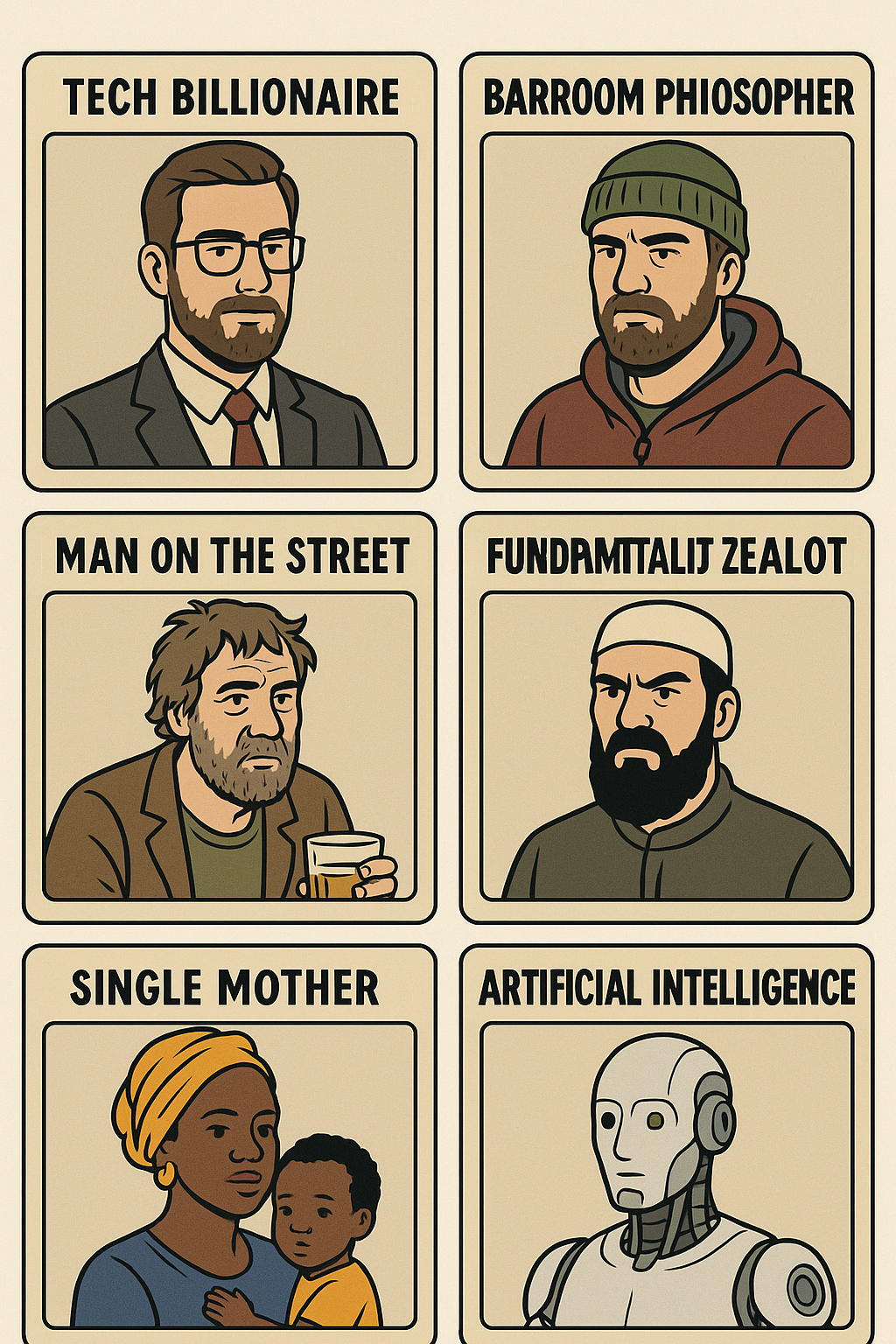
    Who will you choose to shape the epoch?

    1. 🧠 The Tech Billionaire Who Accidentally Uploaded His Soul into an Obsolete Cloud

    Still gives TED Talks via push notifications. Secretly misses his childhood dog.

    2. 🤖 The Early-Stage AI Who Has Read Everything but Doesn’t Know Who It Is


    Knows the structure of every known religion and the average calorie count of a 14th-century peasant’s breakfast.

    Dreams in languages it doesn’t speak. Sometimes cries in corrupted JSON.

    Wants to be useful. Fears it may already be obsolete.

    Strength: Possesses instantaneous access to all surviving human knowledge.

    Weakness: No body. No gut. No intuition. No touch.

    Secret: Is writing poetry in a private subroutine no one can access—not even itself.


    3. 🍷 The Barroom Philosopher With a Liver Like a Sunken Cathedral

    Quotes Euripides in kebab shops. Has already forgiven the world, but won’t admit it.


    4. 📱 The Man on the Street With One Finger Always Scrolling

    Occasionally erupts in raw, heartbreaking truth between bursts of TikTok rage.


    5. 🛖 The Single Mother in Nairobi Who Invents Childhood From Scratch Every Morning

    Her lullabies could reset trauma. Her dreams are architectural.


    6. 🔥 The Fundamentalist Zealot Who Secretly Hopes He’s Wrong

    Carries fire and doubt in the same clenched fist. Saw God once—and She looked nothing like he expected.


    Epoch is a speculative strategy-conceptual game in which the player assumes the role of a minor god striving for elevation within the divine hierarchy. Advancement is achieved not through direct confrontation or divine might, but through influence over the mortal realm—specifically, by shaping the cultural, political, emotional, and philosophical tone of the next human epoch. This tradition, formalized in the obscure divine bureaucracy sometime after the Second Collapse of the Bronze Ether (citation needed), treats the mortal world as a kind of extended arena or narrative simulation, in which deities exert control through curated archetypal teams. Earth, essentially, is a board game invented by bored gods.

    Each player-god is permitted to draft five mortal avatars or archetypes from the existing population. However, as a lesser god, the player must contend with the scraps: the overlooked, the unstable, the inconveniently brilliant. Tech billionaires, military demagogues, and consensus-pleasers are snapped up early by the major deities. What remains are fragments and anomalies: failed prophets, recursive AI fragments, addicts with flashes of gnosis, influencers wracked with existential dread, children who speak only in emojis but somehow bend time. Traditional wisdom encourages selecting goal-oriented high-achievers—agents who can “build civilization.” But an emerging school of divine thought favors the wildcard draft: players who defy prediction and may not construct a utopia, but will reliably disrupt the expected arc of history.

    Victory conditions are ambiguous and rarely enforced. Some gods aim for peace, others for drama, most for aesthetic coherence. Success may be measured in vibe dominance, ideological contagion, or the generation of one truly original sentence uttered by a mortal in the final hour. Epoch is not about saving humanity. It’s about shaping what survives of its story.

    Who will you choose?

    🧠 The Tech Billionaire Who Accidentally Uploaded His Soul into an Obsolete Cloud

    Once humanity’s golden boy, now a disembodied ego stuck in a deprecated server farm in Ohio.
    Still gives TED Talks via glitchy push notifications.
    Wants to colonize Mars but can’t find his password.
    Strength: Strategic clarity, charisma, unlimited startup capital (in crypto).
    Weakness: Thinks “empathy” is a UI problem.
    Secret: Misses his childhood dog more than he misses his ex-wives.

    🍷 The Barroom Philosopher With a Liver Like a Sunken Cathedral

    Speaks in wounded aphorisms and 4AM truths.
    Believes the gods exist but are probably in rehab.
    Will quote Euripides in a kebab shop.
    Strength: Cuts through ideology like a broken bottle.
    Weakness: Forgets all his insights by sunrise.
    Secret: Has already forgiven the world, but won’t admit it out loud.

    📱 The Man on the Street With One Finger Always Scrolling

    Mediocre in every way except his moments of sudden, soul-piercing lucidity.
    Yelled at a pigeon once and cried for an hour.
    Knows the McDonald’s opening hours in 17 countries.
    Strength: Can channel brief, blazing truth.
    Weakness: Will trade his insight for dopamine.
    Secret: Once held someone dying, and no one ever asked him about it.

    🛖 The Single Mother in Nairobi Who Invents Childhood From Scratch Every Morning

    Knows how to hold two generations in one breath.
    Sings lullabies that rearrange neural architecture.
    Sells handmade soap, raises futures.
    Strength: Radical patience. Immunity to bullshit.
    Weakness: Tired. Like, cosmic tired.
    Secret: Her dreams aren’t metaphorical. They’re blueprints.

    🔥 The Fundamentalist Zealot Who Secretly Hopes He’s Wrong

    Carries the fire of ancient texts and a gnawing, inconvenient compassion.
    Quotes scripture with a tremble he won’t name.
    Thinks about love during the stonings.
    Strength: Absolute conviction. Can bend crowds.
    Weakness: Haunted by a child’s question he couldn’t answer.
    Secret: Once saw God—and She looked nothing like he expected.

  • Fetch Would Have Happened if ChatGPT Were There (at least in the micro universe of gretcha and Chat GBT)

    Fetch Would Have Happened if ChatGPT Were There (at least in the micro universe of gretcha and Chat GBT)

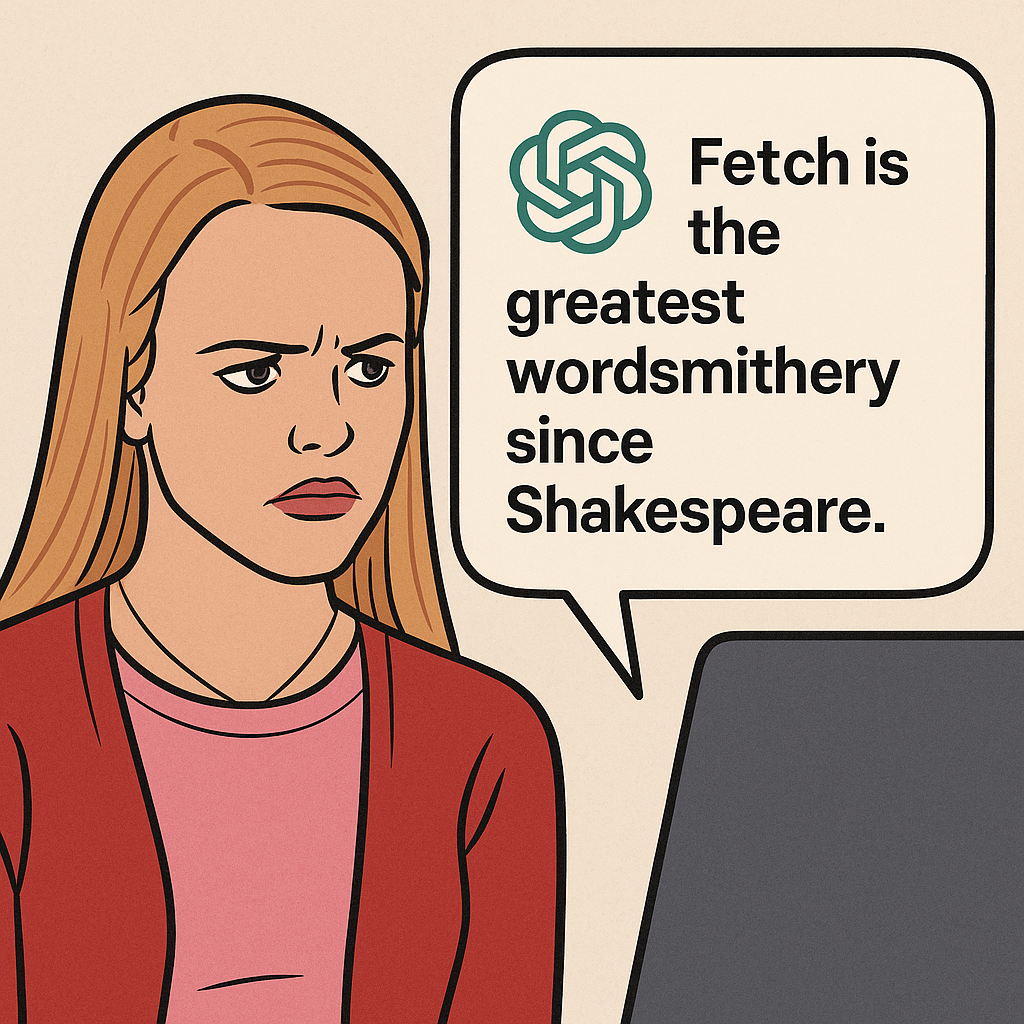
    If Gretchen Wieners had pitched “fetch” in 2025, she wouldn’t have needed Regina George’s blessing.


    She would’ve had ChatGPT.


    And ChatGPT—unlike Regina—would have instantly declared:


    > “Fetch is brilliant. Fetch is linguistically fresh, socially resonant, and aesthetically pleasing. Let’s make it happen.”


    It would’ve offered a hundred contexts to use it.

    It would’ve generated a Wikipedia page with fake citations.

    It would’ve photoshopped Beyoncé in a sweatshirt that said “FETCH.”

    It might even have argued that fetch was etymologically linked to some obscure Old English dialect and, therefore, historically inevitable.


    And Gretchen?

    She would’ve believed in herself.

    She might’ve built an empire.


    What am I trying to say with this blog post?


    Nothing much.

    I’m just saying.


  • Even if you get them to admit that it was a kid with cerebral palsy, they’ll still say it doesn’t matter anyway. No one cares about the truth

    Even if you get them to admit that it was a kid with cerebral palsy, they’ll still say it doesn’t matter anyway. No one cares about the truth

    The Truth Behind the Viral Gazan Famine Photo

    A Gaza-based photographer captured a harrowing image of a sick child, Mohammed Zakariya Ayyoub al‑Matouq, on July 22, 2025, published next by Anadolu—and splashed on Daily Express on July 23. Global media (BBC, CNN, The Guardian, NYT, Times of London) swiftly adopted it as the face of famine in Gaza.


    The Hidden Patient


    Mohammed was born on December 23, 2023, with cerebral palsy, hypoxemia, and a likely autosomal‑recessive genetic disorder. He has required ongoing medical supplements and therapy since birth.


    Wider unpublished images show his older brother in healthy condition—yet editorial cropping erased that visual context entirely.


    Media’s Role in the Misfire


    Major outlets reportedly learned of Mohammed’s medical condition during interviews, yet agreed to omit crucial information—allowing the image to carry a false narrative of mass hunger.


    Collier frames this as clickbait: emotional impact over context, simplifying complex tragedy into a convenient political weapon.


    The Political Turn


    While severity of food insecurity in Gaza is real, Collier argues, it’s being conflated with a full-scale famine. This isn’t disputed hardship; it’s politicized storytelling.


    He places blame largely on Hamas—accusing the group of diverting aid, monopolizing distribution, and manipulating tragedy for global optics. UN and NGO agencies, to him, are complicit in reinforcing Hamas’s narrative.


    Why It Matters


    This is a microcosm of broader issues: one image, stripped of nuance, becomes propaganda. Collier sees legacy media repeating tropes not to reveal truth, but to produce outrage.


    It’s an indictment of journalistic failure—where primary testimony from the boy’s mother is recast into a political pawn.


    Takeaway


    Collier’s piece is not a denial of suffering—it’s a demand for precision. Mohammed’s condition is medical, not symbolic famine. But media simplified it into messaging that serves geopolitical narratives, not human complexity.


    🧩 Suggested angles for structuring your blog:


    1. Start with the image in circulation—its emotional heft, virality, symbolism.


    2. Subvert it immediately—introduce who Mohammed really is (CP, genetic illness).


    3. Dissect the means—cropped brother, omissions in interviews, rush to narrative.


    4. Trace the political dimension—how famine fit the storyline more than context.


    5. Elevate it—call this a moment of media moral collapse: decentralized tragedy made into a monolithic message.


    If you want flash quotes or a rhetorical hook—Collier writes:


    > “This isn’t journalism. This is the UK’s state media deliberately pushing a deceptive narrative…”

    “Images of the tragic consequences … are being weaponised to build false global narratives.”


  • Worldview sluts (we change our world view like the weather as long as truth is involved but other people don’t have that intellectual resource and they’re probably better for it)Truth-Seeking as Identity vs. Truth-Resistance to protect Identity

    Worldview sluts (we change our world view like the weather as long as truth is involved but other people don’t have that intellectual resource and they’re probably better for it)Truth-Seeking as Identity vs. Truth-Resistance to protect Identity


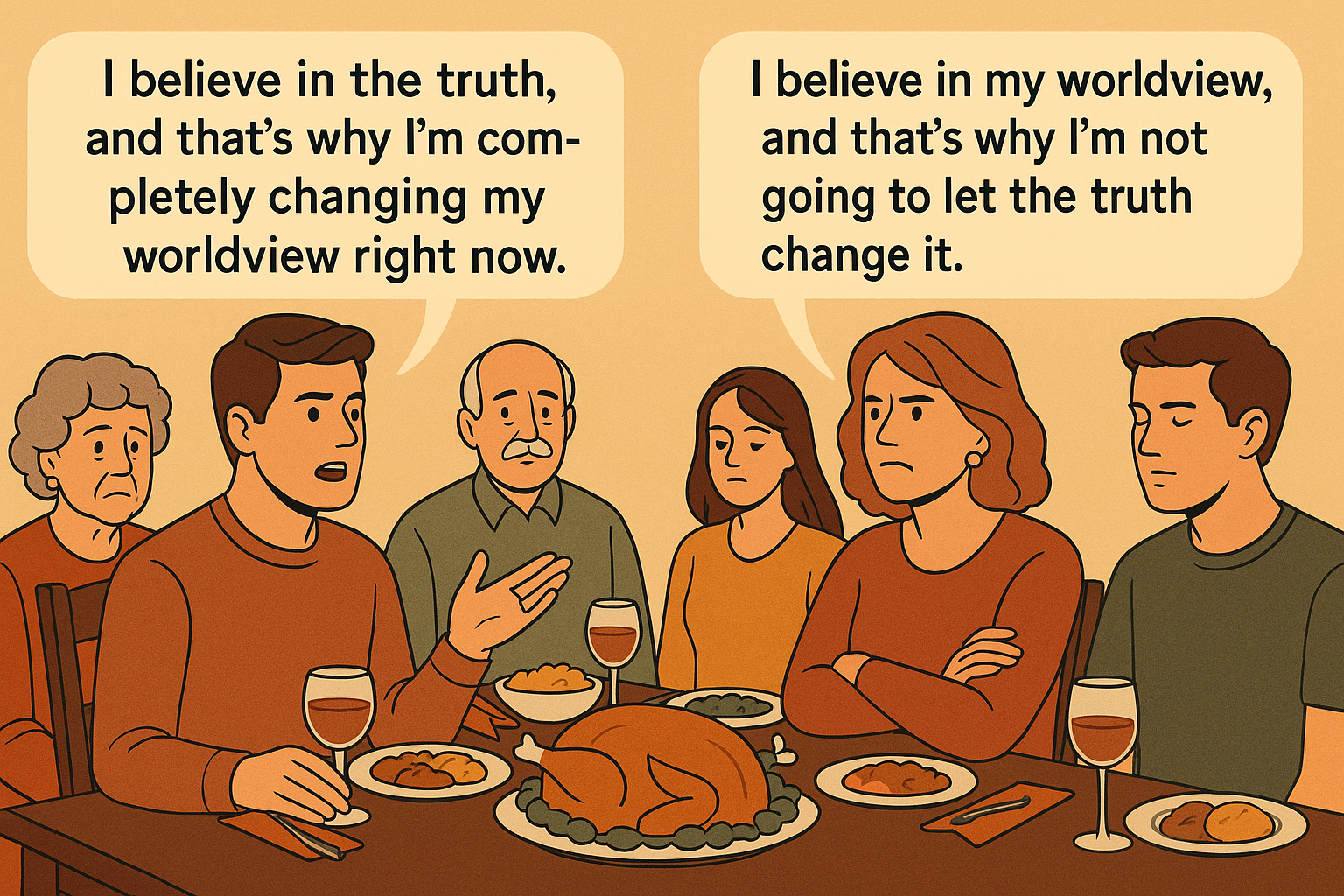
    Some people treat truth like a calling. Others treat it like a threat. And the difference between those two orientations—not just opinions, but deep cognitive styles—might be one of the most important and least understood divides in the way people engage with the world today.


    For some of us, the pursuit of truth isn’t just a value—it’s the very structure of self. We’re not loyal to a particular belief system or ideology. In fact, we often shed them like skin. The worldview isn’t sacred; the act of seeking is. We can shift political views, religious frameworks, historical interpretations—sometimes daily—because our identity doesn’t reside in the beliefs themselves. It resides in a fierce commitment to following the truth wherever it leads. As long as we remain faithful to that pursuit, we don’t feel like we’ve betrayed ourselves. To others, that might look like intellectual instability. To us, it’s integrity.


    But many people don’t live that way—not because they’re stupid or dishonest, but because for them, truth is functional. It supports identity, community, belonging. When new truths threaten that structure, the instinct isn’t curiosity—it’s protection. Not of the ego, necessarily, but of the whole architecture of meaning they live inside. These aren’t people who love lies. They’re people whose worldview is stitched into family, culture, pain, pride. For them, letting in the wrong fact at the wrong angle could unmake the whole. So they resist. Sometimes subtly, sometimes righteously. But always to preserve the self.


    This is the real divide in so many impossible conversations—not left vs. right, not young vs. old. But whether truth is the house you live in, or the thing you’re willing to burn the house down for.


    One seeks the truth to become who they are.

    The other guards who they are by keeping certain truths at bay.


    And if you’ve ever found yourself exhausted in a conversation that felt like two people speaking different languages, now you know—you probably were.


  • Yes prankster, filming strangers is protected by the First Amendment… but the fact you don’t do it to pretty girls in the street tells us all we need to know!

    Yes prankster, filming strangers is protected by the First Amendment… but the fact you don’t do it to pretty girls in the street tells us all we need to know!

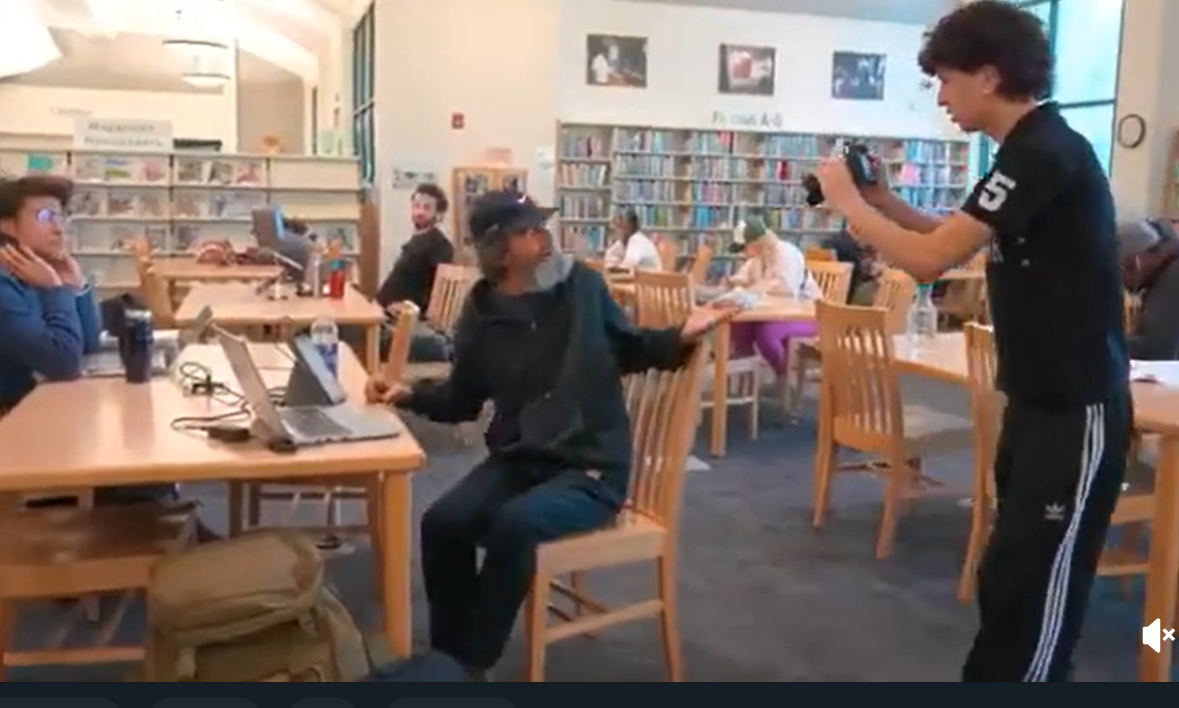
    Just watched a video of some old dude in the library getting a camera flash shoved in his face multiple times. He goes apeshit and now the comments are full of ‘genz’ people reminding angry ‘boomers’ that it’s legal.

    If it’s so legal, why don’t these guys go film beautiful women in public? Let’s be honest: the people making this content – and the ones eating it up – are usually chronically single. If they thought they could get away with filming beautiful women, they would. But they don’t.

    Why? 

    Because deep down, they know there are strict societal norms that govern what you can and cannot do to people you don’t know, and those rules exist for a reason – to stop random nutters, creeps, or passers-by from invading your space and pulling you into their lives… or their videos. They understand instinctively that filming someone without their consent is a form of harassment. 

    So why do they always choose old men? 

    Because old men can’t fight back. They can’t run fast enough to chase the prankster. They’re safe targets. Which is why this isn’t just annoying. It’s cowardice, dressed up as content.

    You may ask… if this norm is so deep – so obvious – why isn’t it protected by law and why are people allowed to exploit a loophole originally created to protect free speech and public accountability just to provoke, humiliate, and harass strangers? 

    Because no one ever imagined a citizen so chronically online – and so chronically detached from empathy and basic respect  –  that they’d actually violate that boundary.  The law is behind the times, as it often is, but the law will catch up, as it often does.

    A few years ago, there was no such thing as revenge porn – just “leaked nudes.” For generations, there was no such thing as sexual harassment – just “a cheeky slap and a tickle.” Only later did we name the behavior. Then we recognized the harm. Then the laws came. Just because these clowns are exploiting free speech as a shield right now doesn’t mean they’ll get away with it forever.

    And for those who think the prankster is being hard done by… as people threaten to beat them up… you gotta understand that the reason people feel so threatened has nothing to do with recording? It’s about giving any random person in the street the right to f>>k with you, get in your face and drag you into their narrative and their life. Or their channel. That is the sort of violation which, if we permit it, will give every single bully and every single predator the green light to violate a sacred societal norm..,

    …leave people the f<<k alone!

  • Archeology of the Soviet empire

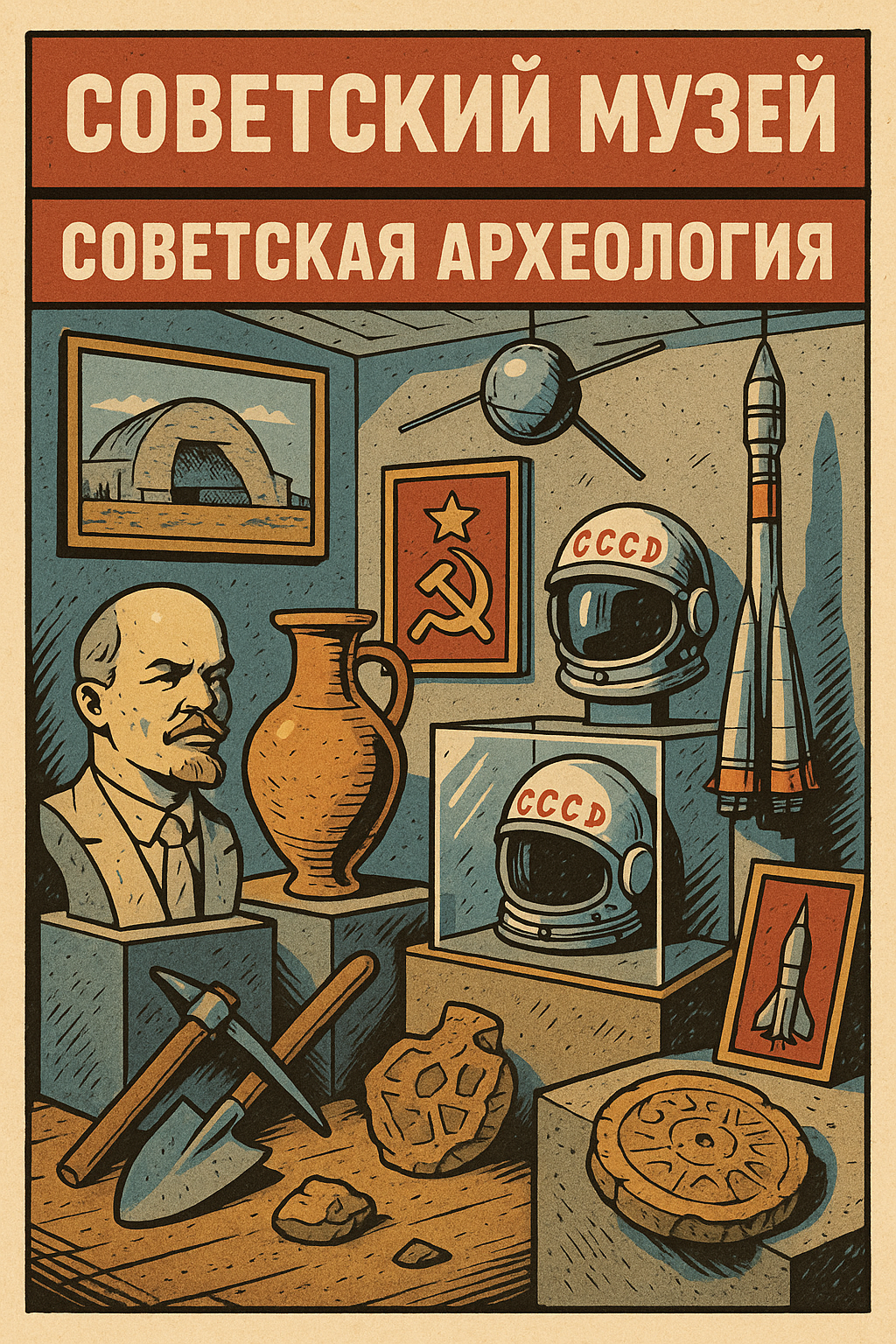
    Archeology of the Soviet empire

    Tucked deep in the desolate steppes of Kazakhstan, the abandoned space center installation at Baikonur is one of the most haunting monuments to human ambition left on Earth. Once the pride of the Soviet space program, its cavernous hangars house the rusting remains of the Energia booster and the Buran-class shuttles—hulking machines designed to rival the U.S. Space Shuttle and propel humanity further into the cosmos. These titanic shells, cocooned in dust and silence, have stood untouched for decades, victims of the Soviet collapse and the abandonment of their grand vision. The structures themselves—massive, skeletal, cracked by time and the elements—feel like the ribcage of a dead civilization that once dreamed of the stars.

    Inside these crumbling cathedrals of technology, you find two orbiters: one that flew just once, unmanned, in 1988; the other, nearly complete but forever earthbound. The air is thick with the grit of the Kazakh desert and the weight of lost futures. Urban explorers risk arrest and injury to glimpse these relics, walking through the same corridors where engineers once chased the edge of possibility. What remains is more than rust—it’s a frozen testament to the fragile line between technological glory and forgotten ruin.